Showing posts with label notes. Show all posts

Friday, 12 June 2009

Application of ICT in Libraries

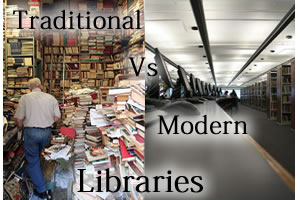
Computers are used in libraries all over the world to provide access to a range of electronic information resources and to manage materials (books, journals, videos, and other media) held in particular collections.
Now, the Libraries not only offers access to printed materials via their reading rooms but also makes available a wide range of electronic information resources. Many libraries digitize material in their collections so that anyone in the world who has access to the Internet can explore the wealth of these collections
Read more Click here goto IGCSE/GCSE ICT revision note

Tuesday, 9 June 2009

Application of ICT in healthcare


dineshbakshi.com has been updated with IGCSE/GCSE ICT revision notes on the Application of ICT in health care industry.
Extract...
Input of data

Information regarding patients in entered into an information system (computer) using a computer keyboard. Common types of keyboards used in a hospital environment are:

Standard keyboard: keyboard with standard key arrangement and features.

Concept keyboard: keyboards with special arrangement of keys and are sued by disabled people or for special application. A concept keyboard is a flat-bed of contact switches covered by a flexible membrane. System and software designers can allocate on or more switches to respond in different ways.

With concept keyboards it is easy to manipulated and manage data or machinery and hence they are ideal for hospital environment. For example, controlling a CAT scan machine in a hospital is done using a concept keyboard specially designed for this purpose.
For complete revision notes Click here

Application of ICT in education


Role of ICT in the Classroom

Radio and television have been used widely as educational tools since the 1920s and the 1950s, respectively. There are three general approaches to the use of radio and TV broadcasting in education:
direct class teaching, where broadcast programming substitutes for teachers on a temporary basis;
school broadcasting, where broadcast programming provides complementary teaching and learning resources not otherwise available
general educational programming over community, national and international stations which provide general and informal educational opportunities.
Read on more... Click here